Top_Mistakes_When_Sourcing_from_China

Top 7 Mistakes Importers Make When Sourcing from China (And How to Avoid Them)

Sourcing from China can dramatically improve your margins.

But without the right structure, one mistake can wipe out your entire profit — or damage your brand permanently.

After managing 800+ sourcing projects across furniture, electronics, automotive parts, and custom products, we consistently see the same critical mistakes repeated.

Here are the Top 7 mistakes importers make when sourcing from China — and how to avoid them.

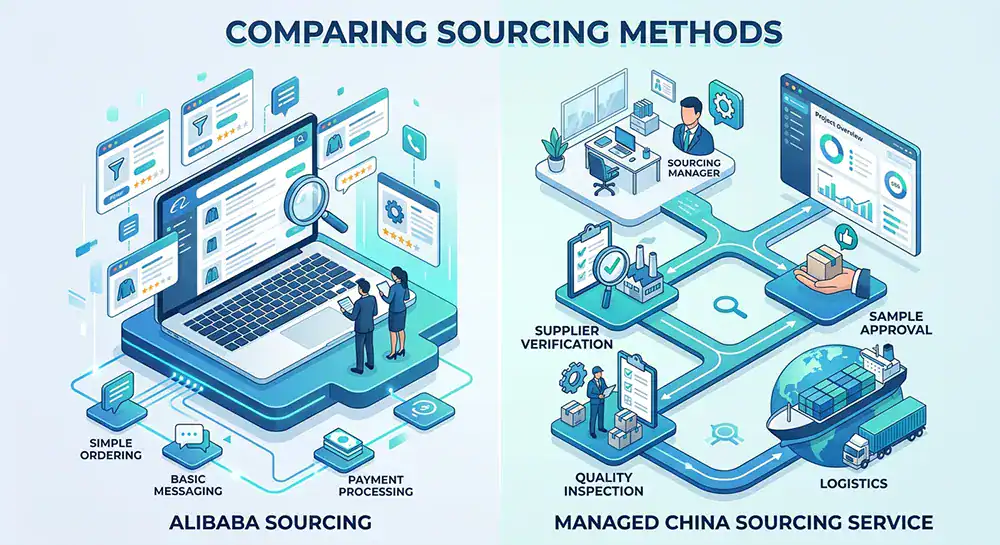
Mistake 1: Relying Only on Alibaba or Online Listings

Many importers assume that a “Gold Supplier” badge equals credibility.

It doesn’t.

Online platforms cannot fully verify:

  • Actual factory ownership
  • True production capacity
  • Financial stability
  • Export experience

How to avoid this mistake:
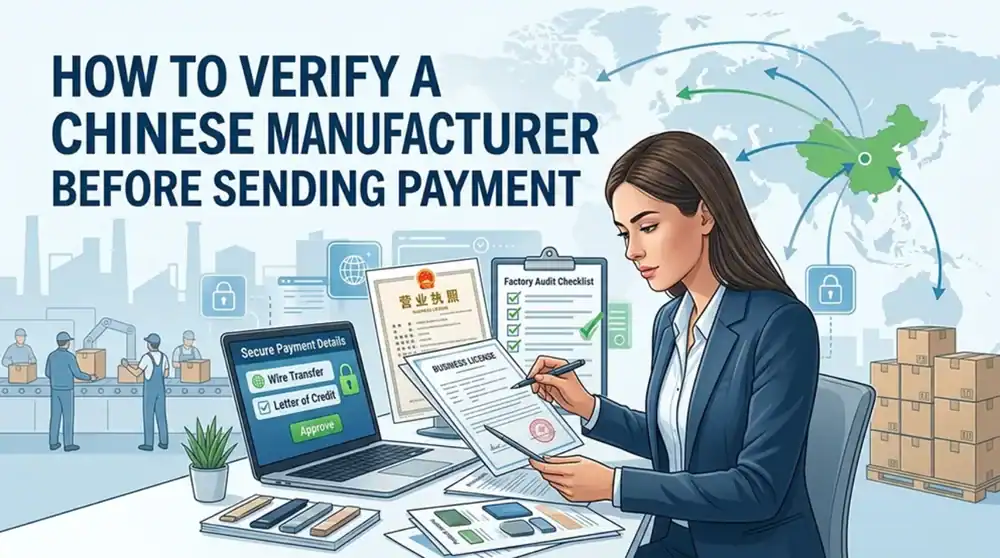
Conduct supplier background verification, request business licenses, confirm factory registration details, and if possible, perform a factory audit.

Mistake 2: Poorly Defined Product Specifications

Most quality disputes happen because product details were never clearly defined.

If specifications are vague, factories will interpret them differently.

Key elements that must be documented:

  • Materials and grade
  • Dimensions and tolerances
  • Surface finishing
  • Packaging standards
  • Compliance requirements

If it is not written clearly, it cannot be enforced.

Mistake 3: Choosing the Cheapest Supplier

The lowest quote is rarely the best option.

Extremely low pricing often indicates:

  • Lower material quality
  • Subcontracted production
  • Inexperienced factory
  • Hidden cost adjustments later

Instead of focusing only on price, evaluate:

  • Quality consistency
  • Communication efficiency
  • Factory stability
  • Production scalability

Mistake 4: Skipping Mid-Production Inspection

Many buyers only conduct pre-shipment inspections.

By then, fixing defects may cause:

  • Delays
  • Rework costs
  • Shipment postponements

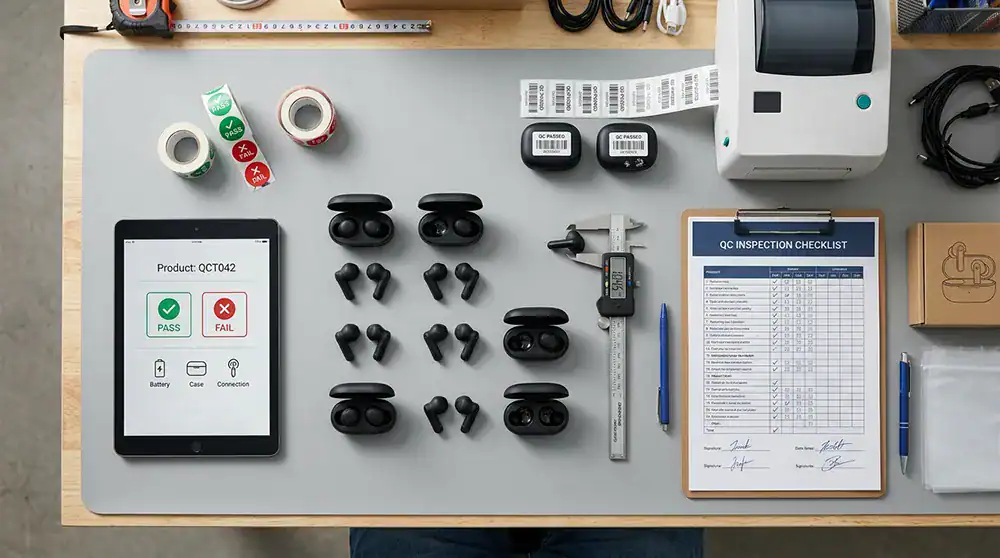
A proper QC system should include:

  • Raw material inspection
  • During-production inspection
  • Pre-shipment inspection

Early detection protects timelines and cash flow.

Mistake 5: Weak Payment Structure

Paying large upfront deposits without safeguards increases risk.

Better payment strategies may include:

  • Milestone-based payments
  • Performance-based release
  • Negotiated deposit ratios
  • Letter of Credit (when applicable)

Cash flow management is just as important as price negotiation.

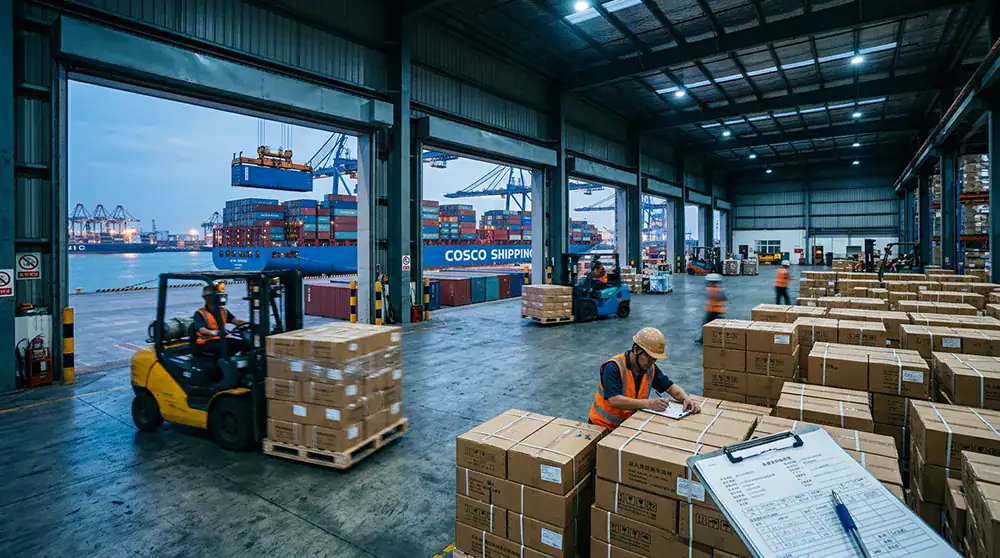
Mistake 6: Ignoring Logistics Strategy

Shipping is not just a booking decision — it’s a profit decision.

Consider:

  • Air vs sea freight
  • Consolidation strategy
  • Lead time impact
  • Seasonal shipping risks

Poor logistics planning can reduce your margins significantly.

Mistake 7: Managing Everything Remotely Without Local Oversight

Time zone differences, language barriers, and cultural nuances can create misunderstandings.

Without local monitoring:

  • Production delays may go unnoticed
  • Quality deviations may not be corrected
  • Negotiation leverage is weaker

Having local presence dramatically reduces operational risk.


How to Source Smarter from China

To reduce sourcing risk:


Why Many Businesses Choose DTL Sourcing

At DTL Sourcing, we act as your eyes and ears in China.


Frequently Asked Questions

Is sourcing from China risky?
It can be if supplier verification and quality control are not properly managed.

How can I reduce risk when importing from China?
By implementing supplier audits, clear product documentation, and structured inspections.

Should I rely solely on online supplier platforms?
No. Online listings should be the starting point — not the verification process.


If you are currently sourcing products — or planning to —
tell us what you’re working on.

We’ll review your sourcing structure and identify potential risk areas before they become costly problems.
Let’s make your sourcing secure and profitable.

Safely Source from China

How to Safely Source from China in 2026 (Without Costly Mistakes)

Sourcing from China remains one of the most powerful ways to increase product margins and scale globally.

However, it also carries risks.

After managing more than 800 sourcing orders and working with over 500 verified manufacturers across China, we have seen where most businesses fail — and how to prevent it.

If you are importing furniture, car accessories, electronics, or custom products, this guide is for you.

Step 1: Verify the Supplier Properly

Many importers rely only on:

  • Alibaba profiles
  • WhatsApp conversations
  • Online reviews

This is not enough. You must verify:

  • Official business license
  • Factory registration details
  • Production capacity
  • Export experience
  • Real operating facility

Without proper verification, you risk dealing with trading companies pretending to be factories — or worse.

Step 2: Define Product Specifications Clearly

Quality problems usually happen because expectations were not documented clearly.

Every product must have:

  • Material specifications
  • Dimensions & tolerances
  • Finishing standards
  • Packaging requirements
  • Testing requirements

If it is not written clearly, it cannot be enforced.

Step 3: Monitor Production — Do Not Wait Until the End

Many buyers inspect only before shipment. This is risky.

Proper quality control includes:

  • Raw material inspection
  • Mid-production inspection
  • Final random inspection

Catching problems early avoids delays and financial loss.

Step 4: Secure Your Payment Structure

Payment terms directly impact your cash flow and risk level.

Options may include:

  • Split payments
  • Letter of Credit
  • Credit facilities
  • Negotiated payment milestones

Strong negotiation can improve your financial flexibility.

Step 5: Manage Logistics Strategically

Choosing between air freight and sea freight depends on:

  • Product size
  • Lead time
  • Margin
  • Inventory planning

Efficient logistics management reduces cost and improves customer satisfaction.


Why Many Businesses Choose DTL Sourcing


Frequently Asked Questions

Is sourcing from China still profitable in 2026?
Yes — when supplier verification, quality control, and cost management are handled properly.

Should I source directly from factories?
Direct sourcing may appear cheaper but increases risk without local oversight.

Do I need a sourcing company?
If you value time, risk reduction, and structured supplier management — yes.


If you are currently sourcing or planning a new product, tell us what you are working on.

Let’s make your sourcing secure and profitable.

sourcing-product-from-china-for-amazon-e-commerce

Sourcing Products From China For Amazon & E-commerce

Sourcing products from China for Amazon and e-commerce brands requires more than finding a cheap supplier. It requires supplier verification, compliance checks, structured negotiation, and logistics control.

Amazon sellers, Shopify brands, and private label businesses rely on China for manufacturing scale. However, profit depends on process discipline.

This guide explains how to manage product sourcing from China for e-commerce in a practical and risk-aware way.

Why China Remains the Core Manufacturing Hub?

China continues to dominate global manufacturing due to its supply chain depth and infrastructure.

Key advantages include:

  • Large-scale production capacity
  • Mature supplier ecosystems
  • Competitive raw material pricing
  • Integrated logistics networks
  • Experience with Amazon FBA requirements

For e-commerce sellers, speed and consistency matter more than just cost.

Understanding Amazon-Focused Product Sourcing

Amazon product sourcing in China differs from traditional wholesale importing.

Amazon sellers require:

  • Strict packaging standards
  • Barcode labeling (FNSKU, UPC)
  • Carton dimension compliance
  • Defect rate control
  • Fast replenishment cycles

A supplier that works well for bulk retail may not understand Amazon’s operational rules.

Private Label Sourcing from China

Private label remains the most common model for Amazon businesses.

Instead of selling generic products, you brand and customize them.

Private Label Sourcing Includes:

  • Custom logo printing
  • Packaging customization
  • Minor product modifications
  • Brand-exclusive molds
  • Instruction manual localization

The goal is differentiation without developing a product from scratch.

Before confirming production, request:

  • Pre-production samples
  • Packaging mockups
  • Barcode placement verification
  • Labeling confirmation

Do not skip sampling.

MOQ Negotiation Strategy

Minimum Order Quantity (MOQ) often creates friction for new e-commerce sellers. Chinese manufacturers quote MOQs based on production efficiency, not seller budgets.

Practical MOQ Negotiation Approaches:

  • Start with trial orders
  • Offer flexible color variations
  • Accept standard packaging initially
  • Negotiate phased volume increases
  • Combine SKUs where possible

Many suppliers reduce MOQ when they see long-term potential. Clear communication reduces resistance.

Packaging & Labeling for Amazon and Shopify

Improper packaging can result in Amazon warehouse rejection. E-commerce-focused packaging must consider:

  • FNSKU barcode placement
  • Suffocation warnings (if applicable)
  • Polybag thickness requirements
  • Fragile labeling
  • Country of origin marking

For Shopify and DTC brands, packaging also affects brand perception.

Consider:

  • Branded inserts
  • QR codes
  • Thank-you cards
  • Custom mailers

Packaging influences reviews and repeat purchases.

Compliance Requirements (FDA, CE, RoHS & More)

Product compliance is not optional. Regulatory failures can lead to listing suspension or customs seizure.

Common Certifications Required:

Product Type Possible Compliance Required
Electronics CE, RoHS, FCC
Food Contact FDA
Children’s Products CPC
Toys EN71
Batteries MSDS, UN38.3

Never rely on supplier verbal claims.

Always request:

  • Test reports
  • Certification documents
  • Lab verification
  • Validity dates

Verify authenticity when possible.

E-commerce-Focused Quality Control

Quality control for e-commerce differs from wholesale container shipments. Amazon sellers must maintain low defect rates to protect listing rankings.

Recommended QC Process:

  1. Pre-production inspection
  2. During production inspection
  3. Pre-shipment inspection
  4. Random sampling with AQL standards

For FBA, carton drop testing is critical.

For DTC brands, packaging durability matters even more. A small defect rate can result in negative reviews that impact ranking and ad spend.

FBA Shipping from China

Shipping directly from China to Amazon FBA warehouses saves time but requires precision. Two main models exist:

1. Direct FBA Shipping

The factory ships goods directly to the Amazon warehouse. Best for experienced sellers with strong QC controls.

2. Third-Party Inspection & Prep Center

Goods ship to a prep center for inspection and relabeling. Safer for new sellers.

Shipping Methods Comparison

Method Speed Cost Best For
Air Freight Fast High Small inventory launches
Express Courier Very Fast Very High Samples or urgent restock
Sea Freight Slow Low Large volume orders
Rail Freight Medium Moderate Europe shipments

Shipping decisions affect inventory turnover and cash flow.

Product Sourcing from China for Shopify & DTC Brands

Shopify brands operate differently from Amazon sellers.

They control:

  • Customer experience
  • Fulfillment speed
  • Packaging presentation
  • Returns policy

Private label manufacturing becomes more important for brand identity.

Long-term ecommerce growth requires:

  • Stable supplier relationships
  • Predictable lead times
  • Clear production timelines
  • Backup supplier options

Supplier dependency is a risk factor. Diversification improves resilience.

Risk Mitigation in China Product Sourcing

Common risks include:

  • Payment fraud
  • Delayed production
  • Substandard quality
  • Intellectual property misuse
  • Hidden compliance issues

Mitigation strategies:

  • Use clear purchase agreements
  • Define penalty clauses
  • Avoid full upfront payments
  • Conduct background checks
  • Register trademarks before production

Risk control protects margins.

Step-by-Step Process for E-commerce Product Sourcing

A structured approach reduces failure probability.

Phase 1: Supplier Identification

  • Shortlist 5–8 suppliers
  • Compare pricing and MOQ
  • Assess communication speed

Phase 2: Sampling & Verification

  • Order samples
  • Test product durability
  • Validate compliance documents

Phase 3: Negotiation & Contracting

  • Confirm Incoterms
  • Define production timeline
  • Clarify packaging specifications

Phase 4: Production Monitoring

  • Conduct inspections
  • Approve packaging
  • Confirm shipping plan

Phase 5: Logistics & FBA Coordination

  • Label cartons
  • Schedule freight
  • Track shipment

Consistency builds supply chain reliability.

Cost Breakdown Example

Below is a simplified structure of sourcing costs:

Cost Component Description
Unit Cost Product manufacturing
Tooling Fee Custom molds (if applicable)
Packaging Boxes, inserts, branding
Inspection Quality control services
Freight Shipping cost
Duties Import taxes
Amazon Fees FBA & referral fees

Profit margin depends on controlling each variable.

Why Structured Sourcing Matters for Amazon Rankings?

Amazon’s algorithm favors sellers with:

  • Low defect rates
  • Consistent inventory
  • Positive reviews
  • Fast shipping

Poor sourcing directly affects these signals.

Strong supplier management improves operational stability.

FAQs

1. How do I start sourcing products from China for Amazon?

Begin with product validation, then shortlist suppliers, request samples, verify compliance, and negotiate MOQ before placing a bulk order.

2. What is the minimum order quantity for private label products?

MOQ varies by product type, but many manufacturers allow smaller trial runs when long-term cooperation is discussed.

3. Can I ship directly from China to Amazon FBA?

Yes, but labeling, carton requirements, and compliance documentation must meet Amazon standards.

4. How do I ensure product compliance when sourcing from China?

Request official test reports, verify certification authenticity, and confirm regulatory requirements for your destination market.

5. Is sourcing from China for Shopify different from Amazon?

Yes. Shopify brands focus more on packaging presentation and brand differentiation, while Amazon sellers prioritize compliance and ranking stability.

Final Thoughts

Sourcing products from China for e-commerce is not simply a cost decision. It is a supply chain management exercise.

Amazon product sourcing in China requires structure, verification, and process control. Sellers who treat sourcing strategically achieve better margins and stable growth.

dtl sourcing control panels china

The Benefits of Outsourcing Control Panel Manufacturing to Asia

In the world of making things, especially in electrical engineering, making control panels needs to be done very carefully to make sure they work well and are of good quality. As businesses try to make their operations better, they are using outsourcing to save money and get help from experts. Asia is a popular place for companies to send their control panel manufacturing work. This article talks about how companies can benefit by getting control panels made in Asia. It explains how this can make the company work better, make better products, and be more competitive around the world.
 

The Evolution of Outsourcing in Manufacturing

Outsourcing used to be just about saving money, but now it is a more complex strategy that involves more than just paying lower wages. Businesses want to save money, but they also want to use outsourcing to get specific skills, make their work more efficient, and have more flexibility. Making control panels involves putting together important parts like fuses and circuit breakers. It needs people with good technical skills, who can work with great accuracy and can make things quickly. By having companies in Asia make their products, businesses can save money and improve how they operate.


Access to Specialized Skills and Expertise

One of the main benefits of hiring companies in Asia to make control panels is that they can find lots of skilled workers with the right knowledge. Asian countries like China, India, and Taiwan have spent a lot of money to get better at engineering and technical stuff. This investment has led to a team of people skilled at managing difficult manufacturing procedures, such as putting together control panels. Companies can use workers from Asia without having to spend a lot of money on training or hiring them.
Furthermore, companies in Asia have lots of experience working with many different types of businesses. They can share helpful tips and ideas to make control panels better. Asian manufacturers have a lot of knowledge about making things more efficient and keeping up with new technology. This helps businesses to stay ahead in their industry.


Cost-Effectiveness and Operational Efficiency

Outsourcing control panel manufacturing to Asia is a good idea because it’s cheaper. Labor costs are going up in Western countries, but in Asia, prices are still good and the quality is not affected. This means that we save money not just on labor, but also on materials, buildings, and other expenses. Therefore, companies can save a lot of money by using the cost advantages and efficient operations of Asian manufacturers.
In addition, hiring companies in Asia helps businesses improve their supply chain and make their production faster. Asian factories are placed close to places that make electronic parts, so they can get what they need on time and make things smoothly. By reducing wait times and making shipping more efficient, companies can make their products faster and better meet customer needs, which helps them stay ahead in fast-paced industries.


Quality Assurance and Compliance Standards

Even though people were worried about how well Asian manufacturers are checking the quality of their products, they have made a lot of progress in making sure their products meet high-quality standards and rules. Many Asian countries have put in place strict systems for making sure products are of good quality and meet international standards like ISO 9001 and ISO 14001. Furthermore, companies also spend money on high-tech equipment and technology to make sure their products are accurate and dependable.
In the world of making control panels, Asian manufacturers focus on making sure the panels are safe and reliable. They work hard to meet strict quality standards. Asian manufacturers make sure their products are high quality by doing thorough testing and following industry certifications like UL and CE. They focus on quality at all stages of making the product. Companies can reduce the risk of product problems by hiring companies in Asia to make their products. This will help keep their reputation good and make customers trust them for a long time.


Scalability and Flexibility

One more important benefit of having control panels made in Asia is that it helps businesses to easily adjust the production and have more options. Asian factories can handle making a little bit of stuff or a lot of stuff quickly and well. This ability to grow helps companies change their production to match market changes without spending too much money or having limited resources.
Additionally, hiring another company in Asia allows businesses to concentrate on what they are best at and what is most important to them. By having other companies in Asia make their products, companies can focus on coming up with new ideas, doing research, and finding ways to sell their products in more places. This plan helps companies to be quick and flexible in a changing and competitive market, to keep growing and making a profit in the long term.


Conclusion

In summary, having control panels made in Asia has a lot of advantages for companies. It helps them work better, compete more, and make higher-quality products. Businesses can use the skills and hard work of people in Asia to make products at a low cost and with good quality. This can help them work better and grow faster.

In this case, putting important parts like fuses and circuit breakers in control panels shows how important it is to make them very carefully and make sure they work well. This also shows why hiring companies in Asia to do this work is a good idea. By using the knowledge and skills of Asian manufacturers, companies can make sure that control panels work well and are safe in different industries. Many companies are sending their control panel manufacturing work to Asia because they want to save money and make better products.